SKIMMING AND SCANNING
- Skimming: Reading through the text three to four times faster than when you read each word in order to get a sense of the topic, ideas and information being conveyed.
- Scanning: Reading through material to find specific information.
SUMMARISING INFORMATION
. A good summary phrases these points in a concise and clear style.
一篇优秀的摘要应以简洁明了的风格概括这些要点。
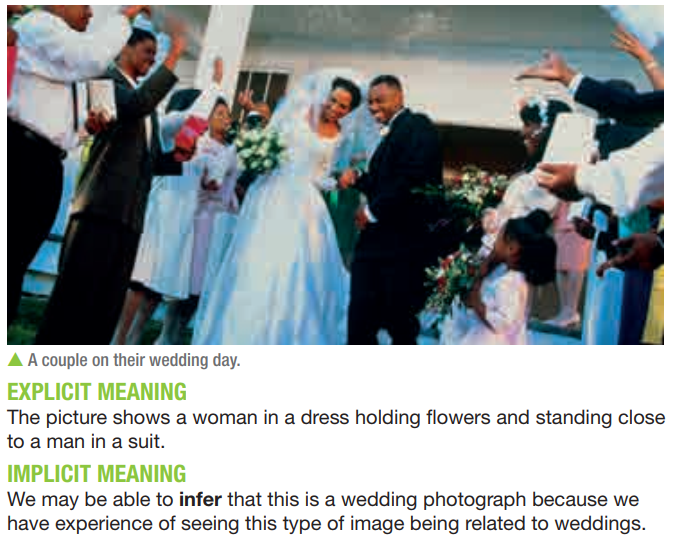
EXPLICIT AND IMPLICIT MEANING 显性与隐性意义
短文阅读
- We hiked till five and camped beside a tranquil spring in a small, grassy clearing in the trees just off the trail. Because it was our first day back on the trail, we were flush for food, including perishables like cheese and bread that had to be eaten before they went off or were shaken to bits in our packs, so we rather gorged ourselves, then sat around smoking and chatting idly until persistent and numerous midgelike creatures (no-see-ums, as they are universally known along the trail) drove us into our tents. It was perfect sleeping weather, cool enough to need a bag but warm enough that you could sleep in your underwear, and I was looking forward to a long night’s snooze– indeed was enjoying a long night’s snooze – when, at some indeterminate dark hour, there was a sound nearby that made my eyes fly open. Normally, I slept through everything – through thunderstorms, through Katz’s snoring and noisy midnight pees – so something big enough or distinctive enough to wake me was unusual. There was a sound of undergrowth being disturbed – a click of breaking branches, a weighty pushing through low foliage – and then a kind of large, vaguely irritable snuffling noise.
- 我们徒步走到五点,在小径旁树林中一小块长满青草的空地上,在一处宁静的泉水旁扎营。0因为这是我们第一天踏上小径,食物非常匮乏,包括奶酪和面包等易腐烂的食物,它们必须在变质或被背包震碎之前吃掉。于是我们狼吞虎咽地吃起来,然后坐在那里抽烟,闲聊,直到无数像蠓虫一样的生物(蚋虫,这是小径沿途人们的普遍称呼)不断地把我们赶进帐篷。天气非常适合睡觉,凉爽到需要睡袋,但又足够温暖,可以穿着内衣睡觉。我正期待着一夜好眠——事实上,我正享受着一夜好眠——就在这时,不知何时,黑暗中传来一阵声响,我猛地睁开了眼睛。通常情况下,我睡得安稳——雷雨交加,卡兹的鼾声,还有他半夜吵闹的尿尿——所以,有什么足够响亮或特别的声音吵醒我,这很不寻常。我听到的是灌木丛被搅动的声音——树枝断裂的咔哒声,低矮树叶被重物推开的声音——然后是一阵巨大的、略带烦躁的鼻息声。
- Bear!
I sat bolt upright. Instantly every neuron in my brain was awake and dashing around frantically, like ants when you disturb their nest. I reached instinctively for my knife, then realized I had left it in my pack, just outside the tent. Nocturnal defense had ceased to be a concern after many successive nights of tranquil woodland repose. There was another noise, quite near. “Stephen, you awake?” I whispered. “Yup,” he replied in a weary but normal voice. “What was that?” “How the hell should I know?” “It sounded big.”
“Everything sounds big in the woods.” This was true. Once a skunk had come plodding through our camp and it had sounded like a stegosaurus. - 熊!
我猛地坐直身子。霎时间,大脑里的每个神经元都苏醒过来,像被惊扰的蚁群般疯狂奔窜。我下意识伸手去摸匕首,随即想起它被遗落在帐篷外的背包里。连续数夜在林间安眠后,夜间防卫早已不再是我的顾虑。又一声响动传来,近在咫尺。”斯蒂芬,你醒着吗?”我轻声呼唤。”嗯,”他疲惫却正常的嗓音传来,”那是什么?””我哪知道?””听起来好大。” “森林里所有声音都显得巨大。”这话没错。有次臭鼬蹒跚穿过营地时,那脚步声简直像雷龙在行走。
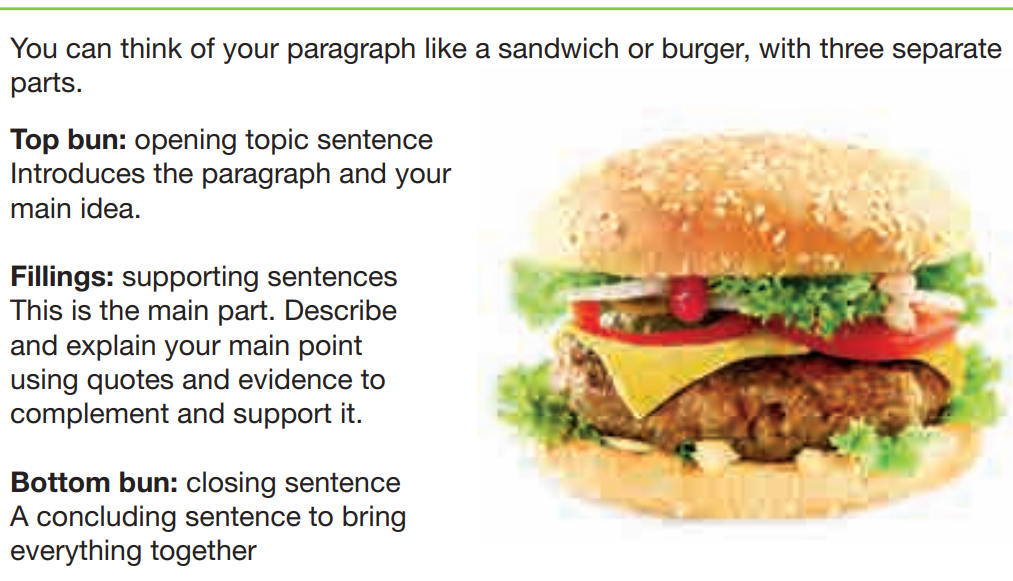
Point-Evidence-Explain.
The P-E-E chain stands for Point-Evidence-Explain. This is the order in which you should organise the information in each paragraph that you write.
P-E-E链代表要点-证据-解释。这是你组织每段信息时应遵循的顺序。
1 State your basic point clearly and concisely. Your point should be relevant to the task or question that you have been set.
清楚简洁地陈述你的基本观点。该观点应与你所承担的任务或被提出的问题相关。
2 Demonstrate how you can support your opening statement with reference to a specific part of the text that you are writing about. Quotations can be used as evidence to support what you are saying and to help you to make your point. Try to select words or phrases from the text that precisely support your point and keep them as brief as possible. Use inverted commas, also known as quotation marks, to indicate where you have used words directly from another text.
展示如何通过引用文本的具体段落来支撑你的开篇陈述。引用可作为佐证,既能支持你的论点,又能帮助阐明观点。尽量从文本中选取精准支持论点的词语或短语,并力求简洁。使用引号(即双引号)标注直接引用的原文。
3 Add an explanation. The first step is to explain how your quotation supports the point that you have made so that your reader knows why you have included it. In English Language, it is often useful to consider the use of language, going into some detail about the writer’s choice of words (this is also known as diction) and considering any linguistic devices or techniques which have been used.
3 添加说明。第一步是阐明引文如何支持你提出的观点,让读者明白引用它的原因。在英语语言分析中,通常有必要考察语言的使用方式,详细探讨作者的措辞选择(亦称词法),并分析所运用的任何语言手法或技巧。
When you read a text, you form an opinion. Understanding how writers present ideas is key to understanding how texts work. You need to be aware of a variety of ways in which writers use language to influence their readers. The devices used tend to be linked to the purpose of the text. So a text which tries to persuade a reader of a particular opinion will use rhetorical devices, while a text which describes another country is likely to use a wide range of descriptive and figurative devices to establish a vivid sense of place. When you read a new piece of non-fiction, you should first try to understand what points are being made.
阅读文本时,你会形成自己的观点。理解作者如何呈现思想是理解文本运作的关键。你需要意识到作者运用语言影响读者的多种方式。这些修辞手法往往与文本目的相关联。例如:旨在说服读者接受特定观点的文本会运用修辞手法;而描述异国风情的文本则可能借助丰富的描写手法和比喻手法来营造鲜明的地域意境。阅读新非虚构作品时,你应首先尝试理解其核心论点。
Views: 0
